Category Archives: Roof Repairs

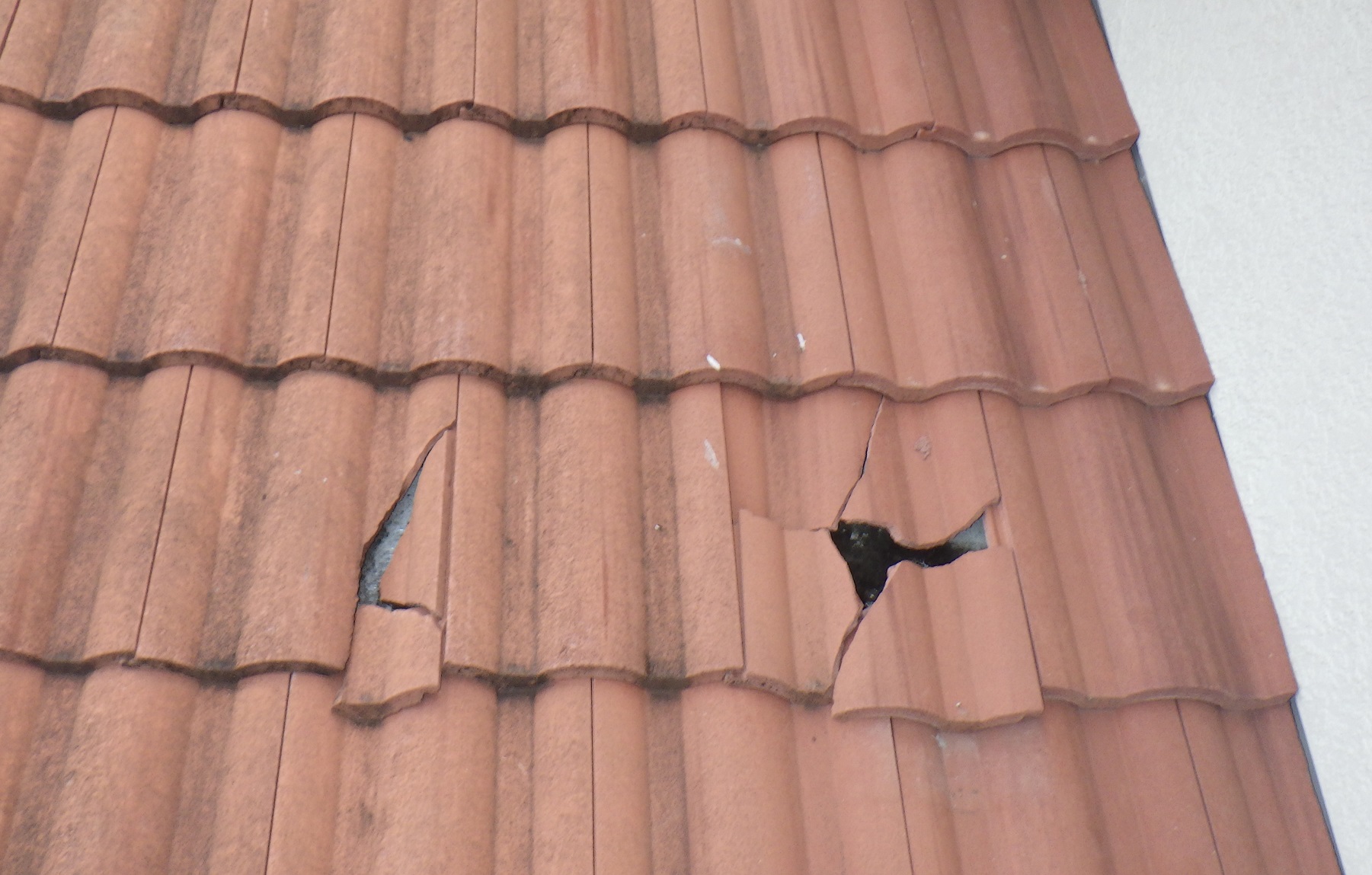
Broken Roofing Tile - Damaged Roofing Underlayment

Why Replace My Broken Roofing Tile?

Broken Roofing Tile - Damaged Roofing Underlayment

Broken roofing tile causes crack in tile roofing underlayment.

Broken roofing tile can cause problems to your roof eventually. It may appear that nothing is happening, but over time problems can pop up.

A roof leak can develop due to the ultraviolet rays now weathering your tile underlayment and developing cracks. Usually this takes place in a section of the tile roof that you can’t see. If it were right in the front where you walk all the time, then it is easier to see and react. This can happen regardless of the type of tile roofing system that is installed on the roof.

Broken roof tile can allow water to enter the tile roofing system (between the tile underlayment and roofing tile). If the tile roofing system was designed with edge returns on the flashings, then the roofing tiles themselves are an important part of the waterproofing.

If the tile roofing system is a sealed tile underlayment system with a foam or mortar tile roofing attachment, then it is not so critical that the broken roof tile not allow water to enter the system. This will still allow the ultraviolet rays to prematurely break down the tile underlayment. It takes a while, but just a couple of years passing by would let this happen. Ask yourself this, “How often do I really look up there?”

Broken Tile causes roof leak

Cracked all the way through the tile underlayment.

Having us do a once over at least once a year will alert you to any broken roofing tiles that you may have not seen. Counting the broken roofing tiles is something we do when we provide the once over service. Cleaning the gutters and checking over the roof is a good practice to keep your roof maintained.

Paying attention to the type of tile underlayment that is installed when you do the tile reroof will help keep the roof in tact when broken tiles exist. Most tile roofing underlayment is not designed to be exposed to the elements past 6 months. Some have a rating of “as soon as possible”. Most of the tile underlayments that are installed today are the self-adhered underlayments, designed to be under roofing tile. Some are thin and others are thick with extra protection from the elements. We like to install SA Cap as a tile underlayment so then the exposure time is not so critical. This is the same material that we use on flat roofing that is designed to be exposed to the elements without anything on top of it.

Palm frond breaks roofing tile

Broken roofing tiles from fallen palm fronds.

A really bad roof leak in Naples, FL

ROOF LEAK EMERGENCY!

So, we get a call from a frantic customer and they are not happy when we tell them it will be a few days before we can go look at the “worst roof leak ever” (customer’s words). Fortunately, we had an opening sooner than later and was able to meet with the customer’s contractor first thing in the morning, the very next day. All we got was that yesterday’s rain made it leak really bad and these kitchen cabinets are going to get ruined, unless we fix this roof leak now.

They were all set to have us do a huge roof repair, similar to one we did several years ago on the other side of the front entry. Now this problem is on the opposite side and “appears” to be what needs to be done. We were more than enthused, since that was a pretty big job, and let’s face it, we were in all the way.

Well, we are not easily swayed into action when our philosophy is to find out what the problem is first (if at all possible), and then fix it. Not the other way around. This is even when the carrot is right there where we can grab it. After all, the only reason we are there is because there is water pouring out of a can light in the kitchen. Otherwise, we would be somewhere else. So the question is, “Why?”

A really bad roof leak in Naples, FL

Water pouring out of can light in a Naples, FL kitchen after heavy rain.

So the story goes on…

After a few moments of despair and awkward conversation with the customer’s contractor, the roofer said “I need to get in the attic and see what the problem is!”

AC Pan full of water and Posing as Roof Leak in Naples, FL

AC Pan posing as roof leak

Notice the top side of the can light in the bottom center of the photo above.

So looking at the underside of the plywood roof decking in the attic, there was absolutely no evidence of any roof leak. The air condition overflow pan was full of water. This particular unit has a condensate line coming out of the machine and also a secondary line to drain the overflow pan underneath of the unit. Both of these lines were clogged and not draining. So every bit of water coming out of the unit was going into the kitchen.

Roof Repair Naples, FL

A/C pan full of water posing as a roof leak

Apparently, once it starts raining, the humidity level goes up and makes it even worse. This is why the customer associated the problem with the rain.

Either way, they got what they wanted, because now they are just minutes away from getting the water to stop pouring in. They turned off the air conditioning unit, and that alone is miles ahead of where they were yesterday. After the condensate lines are unclogged and flowing, they will at least not have water flooding the kitchen anymore.

Now it’s time to call the drywall company!

Believe it or not, this is a common call that we get. It is worth investigating, because we have had several cases where the roof was leaking and the A/C was also overflowing. Although, that scenario is very rare. Most of the time, water leaking from the ceiling is a roof leak. Either way, we will be sending a bill if we discover the air conditioning is the problem and the roof is not. There are a few questions that can be answered to investigate this issue, but that is for another time.

I think the reason I am writing this post is because the customer was set on having us repair the valley-cricket combo. A huge roof repair.

Is that Spot on the Ceiling an Active Roof Leak?

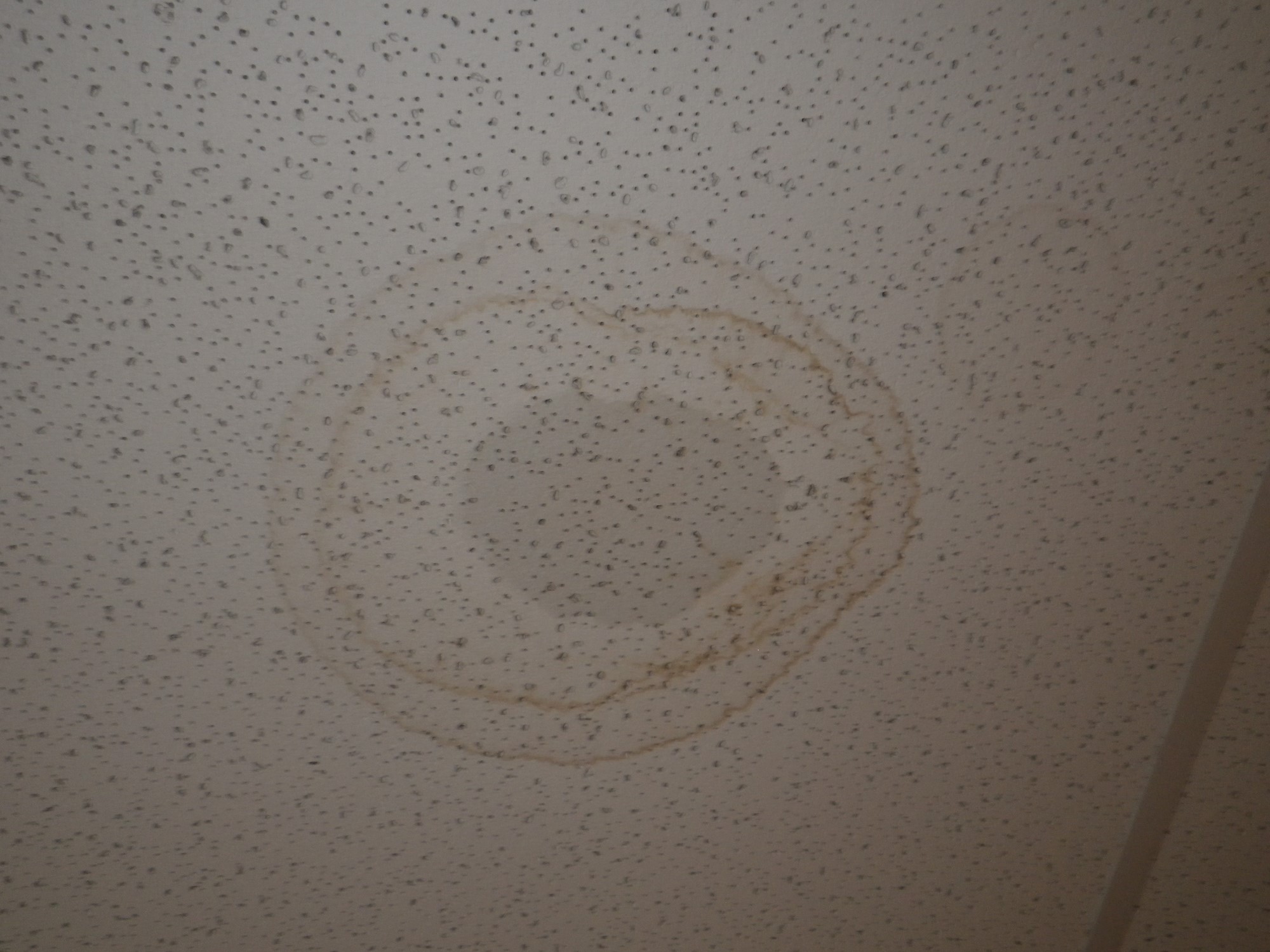
Roof Leaking? This spot on the ceiling tells a tale that this roof leak didn't just start yesterday.

Roof Leaking? This spot on the ceiling tells a tale that this roof leak didn’t just start yesterday.

Looking at this photo of a stain from a roof leak, it is telling. This photo is showing some brownish color rings with a darker gray color circle inside of them. The darker gray color is also more of a solid circle than the brownish rings. The darker gray color is actually wet to the touch and the brownish color rings are dry to the touch.

Looking at this photo, it is apparent that this leak did not just start and has had some time to create the brownish staining. Since there are several rings, it indicates that it has leaked and dried several times. The brown stain is particles in the water from its travels from the roof, then the deck, then the truss system or joists, the insulation, and then the topside of the ceiling board. In this case, the ceiling is a drop ceiling, which just means it is installed as a system on its own and not installed directly to the roof trusses or joists. This allows for mechanical and lighting items to be installed and serviced in between the ceiling and the roof.

Usually when there is brown staining, it means that the leak is dry or has been dry. It does not mean that there is not a roof leak, but can signify that there was a leak at one time.

Throughout a season, the stain may stay a brownish color until such time the roof leaks in sufficiently to allow the water to make it all the way to the ceiling and show itself. This is when it will turn the darker gray color and signify that it is wet, this would mean that the roof leak is active.

We have run into many situations where there are stains on the ceiling from previous roof leaks and the client will ask, “Is that leak active?” Typically this is a new owner that does not know the history of the home or building. The response is always the same, “Not sure, we will have to wait for rain or water test!” The current or past occupant of the home or building is the person to ask, because they are the person that would be around when it rained to see if the spot turned that darker gray color. If an entire summer season passes and the brownish color stain never changes, then it is probably safe to say that the roof leak is not active.

This is a generalization and does not represent all situations, but is geared towards explaining what color the stain is when it did leak from that heavy rain we got last night. Now this wet area may only last a day or so after the rain stops and then it is back to the way it looked before.

Gutter System in Attic to Control Roof Leak

Save Money on Roof Vent Leak (NOT ACTUALLY) by Installing Gutter System in Attic

Gutter System in Attic to Control Roof Leak


One way to save money on a roof vent leak repair is to install a gutter system in your attic to channel the leak to the soffit area. This photo shows just that, a real life attic gutter system. Incidentally, this 8′ off ridge vent had to be replaced after the gutter system started leaking. Homeowners can sometimes be very crafty about getting past roof leak problems. It may not actually have been to save money, but a way to get past the problem more quickly.


By the way, Sunshine Roofing of SW FL, Inc. does not actually recommend this technique. We recommend calling us so we can investigate and give you a free estimate for roofing repair. Once we got approval to replace the 8′ roof vent, we did just that.

Roof Vent Before

This is the existing vent before we messed with it. The vent was installed without any skirt flashings even though the tile was installed with fasteners.

Roof Vent after removal
Taking up the vent from the roof and inspecting underneath. Wasn’t too bad, probably leaking in the vent somewhere and had not completely rotted the wood yet.


Removing and replacing 8′ roof vents is something we do quite often. We don’t recommend installing 8′ off ridge vents. We recommend installing 4′ off ridge vents. The 8′ off ridge vents seem to develop a sag in the center and end up holding water which will rot out the vent. The 4 ‘ vents are a little stronger due to less of a span and can be installed with a slight tilt to keep the water off of them. If one is already installed we will work with it as it is more costly to try to retrofit two 4′ off ridge vents in its place. Installing only one 4′ off ridge vent in place of an 8’ off ridge vent just doesn’t seem to cut it.

Extra protection for Roof Vent

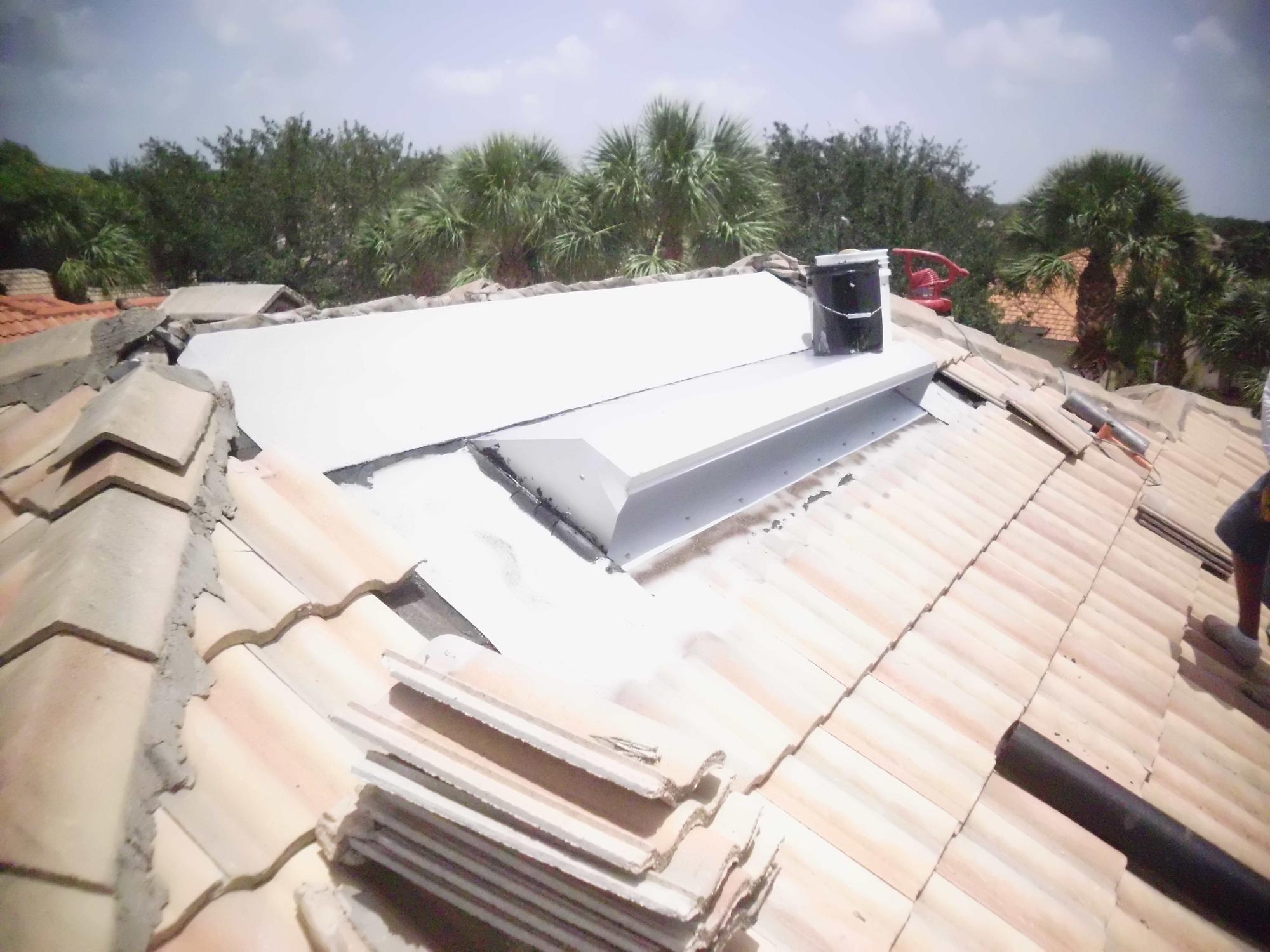
After we installed the new vent we tied in the new vent with cold process modified bitumen. This is the same product we use on flat roofs.


Roof Vent Right Way

Now for the lead sheet. This is to keep the water on top of the roof system. This tile roof system is that type of system.


Roof Vent all finished

All finished! Looks just like it was installed from the beginning.